Text-to-Video vs Your Own Footage: Why Authentic Wins
Text-to-video generates stock. Your footage tells your story. A creator's breakdown of when text-to-video works, when it fails, and why the whole category may already be overshooting.
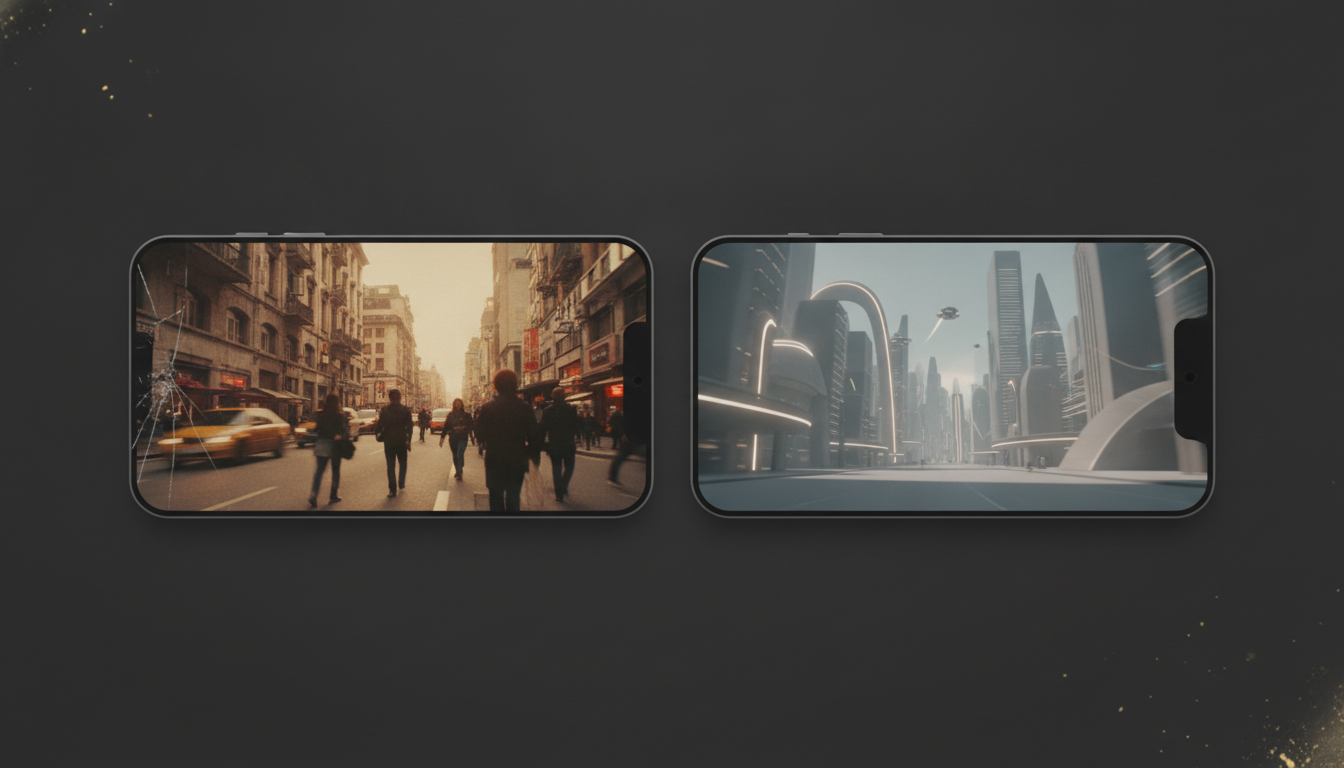
Something is quietly happening on your feed. The videos generated by text-to-video tools are getting scrolled past faster than they were six months ago. The videos shot on phones by real people are getting saved.
Not because AI is bad. Because audiences have started to notice the difference, and the difference is starting to matter.
This is not a rant against AI video. It's a working creator's honest look at when text-to-video fits and when your own footage wins. Both have a place. But for most creators posting to real audiences on real platforms in 2026, the split is not as balanced as the AI industry would like you to think.
What text-to-video actually does
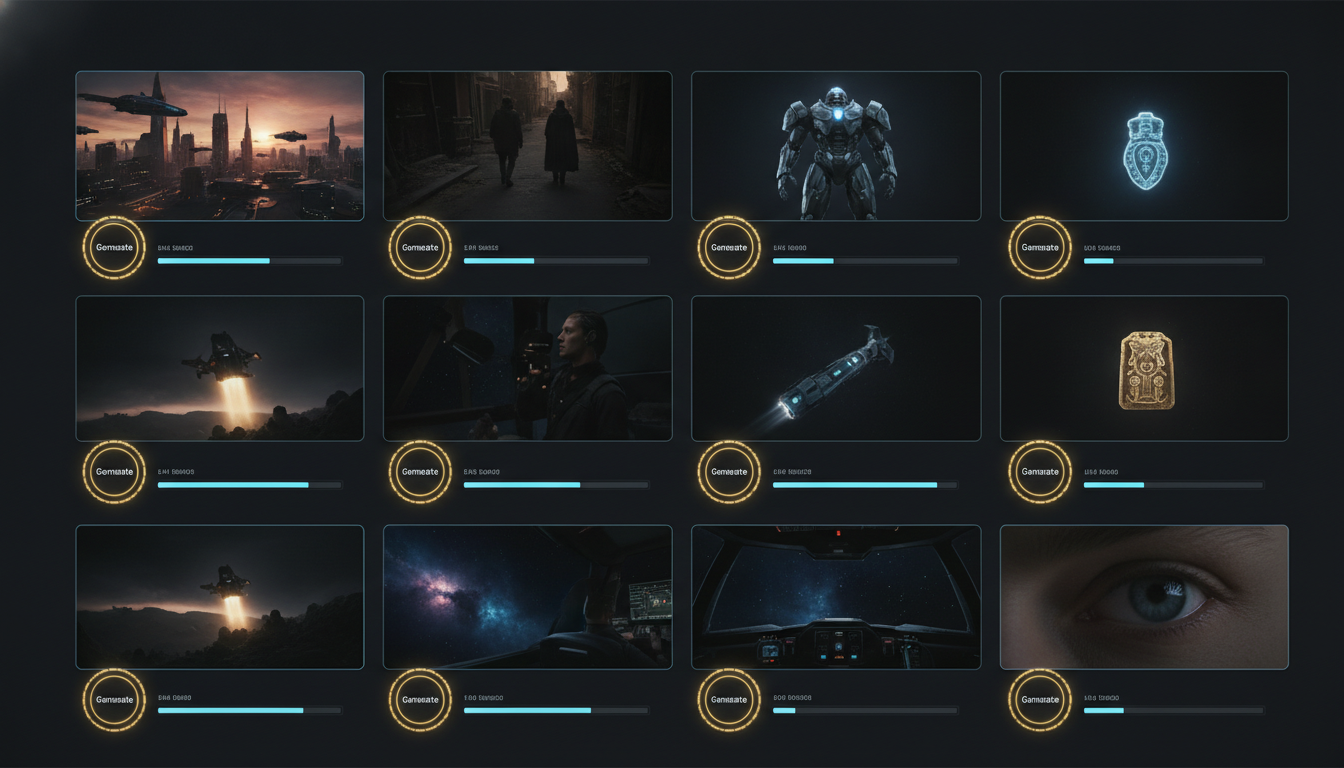
These tools take a written description and generate a moving image from scratch. You type a prompt like a person walking through a rainy street at night. The tool renders a clip that matches. No camera. No filming. No editing. Just a description in, a video out.
The output has gotten remarkably good. Skin looks like skin. Lighting behaves the way lighting behaves. Motion mostly follows the physics you expect. For a technology that essentially did not exist three years ago, the progress is real. The quality gap between what these tools produced eighteen months ago and what they produce today is genuinely startling.
The catch is what the tools are actually building. Every clip is stock. Even when it looks specific to your idea, it is synthetic content that has never existed in the real world. It looks like something. It shows nothing that actually happened.
This distinction matters because most of what creators post is not fiction. It is documentation. Your morning. Your business. Your trip. Your opinion. Generative video is a fiction tool. Most creator content is nonfiction. That mismatch is the reason so much AI-produced content lands flat on feeds where the audience expects to see something real.
Why AI generated video feels off (even when it looks good)
You have probably scrolled past a text-to-video clip and felt something was wrong before you could say what. This is a real thing, and it has a name in the research community. The uncanny valley for video.
The technical failure modes are getting rarer. Bent buildings. Warped playground equipment. Reflections that do not match. Hands with the wrong number of fingers. These are becoming less common with each new model release.
But even when the technical rendering is clean, something still reads as off. The light hits the face at an angle that never quite matches the direction the person is looking. The eyes track without the small involuntary movements real eyes make. The clothes hang in a way that looks reasonable but not remembered. Everything is correct and nothing is right.
A recent study out of UC Riverside identified that AI video generators leave distinct fingerprints across 19 different systems. The researchers built a tool that can not only spot AI video, but identify which model created it. Detection is becoming an entire field of its own, which is a signal worth reading. The market is investing in telling real from fake because audiences want to know.
When text-to-video is actually fine
Being honest about where these tools work is important, otherwise this whole argument reads as one-sided. Generative video is fine for concept mockups. You want to sketch out what a scene could look like before you go shoot it. Generate a version. Use it as a reference. Nobody is claiming it is real.
It's fine for abstract animation. Motion graphics, dream sequences, hypothetical futures, illustration-heavy content. When the audience already knows the video is not documentary, synthetic is a reasonable tool.
It's fine for brand experimentation. Testing a wild visual direction that would be expensive to film. See if it lands with your audience before you invest in a real production.
It's fine when the idea itself is fictional. A short film. A stylized ad. Content where nobody expects the footage to represent something that happened.
Notice the pattern. Generative video works when the audience is not expecting a real record of a real thing. The moment the content pretends to be documentation, synthetic starts to fail. This is the boundary that matters, and most creators cross it without noticing.
When your own footage wins every time
The opposite side of that pattern. Synthetic video loses to real footage in most of the content creators actually make.
Personal stories. If you are telling your own experience, the footage should be yours. Generated clips inserted into your story do the opposite of what you want. They break trust.
Tutorials. If you are teaching someone how to do a real thing, showing them a real thing being done matters. AI-generated hands using AI-generated tools have zero teaching value.
Founder content. Building in public only works if the public believes you are actually building. AI-generated office footage feels like a lie even if it isn't one.
Product content. Real customers using real products in real environments outperforms polished AI-generated product shots because it looks like something that could actually happen to a real person watching.
Testimonials, case studies, event coverage, behind-the-scenes footage. Anything requiring trust. And it turns out that is most of what a creator posts. The reason your reels work is that they show a real person doing a real thing. The moment that stops being true, the format stops working.
The math is uncomfortable for the AI video industry but honest for creators. Roughly eighty to ninety percent of what most creators publish falls into the trust-required category. Which means for eighty to ninety percent of your content, your own footage is the answer. Not because AI is bad. Because the format demands what it demands.
The detection wave nobody is talking about
This is the market signal worth reading. The Content Authenticity Initiative reported in 2026 that interoperable provenance has moved from principle to practice. Content Credentials are being built directly into cameras, browsers, and search tools. The C2PA standard is embedding verifiable origin information into media at the moment of capture.
Translation. The infrastructure for proving what is real and what is generated is being built into everything. Camera manufacturers, browser vendors, and search engines are all agreeing on how to mark content as authentic. This is not a small industry conversation. This is Adobe, Google, Sony, and Microsoft aligning on a standard.
Why does that matter for you as a creator? Because in eighteen months, the platforms your audience uses will start displaying which videos are generated and which are captured. The audiences that currently only suspect something is off will have a small icon telling them for sure. The creators who built brands on authentic footage will benefit from that shift. The ones who built on synthetic will not.
The uncanny valley is not a technical problem. It is a trust problem. And trust is what platforms will start scoring.
The one-hour test
Pick your last three reels. Look at them as a viewer scrolling past for the first time. Ask yourself: which parts feel real, and which parts feel produced? If your best-performing reels are the ones that look the most captured (as opposed to the most polished), that's your feedback. Your audience is already telling you where they want you to lean. Most creators just haven't looked at their own analytics through that specific question yet.
The Beerolls approach: use what you already shot
Here is the workflow that this whole argument points to. You already have footage. Your camera roll has been filling up for months, maybe years. Trips, meals, walks, workouts, small moments you filmed because they looked good. This footage is not the raw material for a synthetic tool. It is the reel.
Beerolls is built around this. You drop in one line of an idea. It writes a script in your tone. You use your own voice or a voice clone made with your consent. Then it cuts your existing clips to the script, line by line. The reel that comes out is 100% yours. Your footage. Your voice. Your story.
What Beerolls does not do is generate video from a prompt. That was a deliberate design choice. If your footage is the answer, the tool should help you use it faster, not replace it with something synthetic.
The technology that makes this work is not generative. It is semantic matching, where the tool reads what is actually in each of your clips and pairs the closest one to each line of your script. Same underlying AI capability that generation tools use, applied in the opposite direction. Retrieval instead of generation. Finding what you already shot instead of inventing what nobody shot.
How to choose between text-to-video and your own footage
If the idea is fictional or abstract: Generative tools are fine. Generate away.
If the idea is a personal story, tutorial, product demo, or documentation: your own footage every time. Synthetic breaks the format.
If you're not sure which category you're in: default to your own footage. The upside of authentic is bigger than the upside of synthetic in almost every scenario, and the downside of synthetic (loss of trust) is bigger than the downside of authentic (a slightly rougher looking clip).
The whole text-to-video vs your own footage debate is only interesting for creators who genuinely do not know which side of the line they are on. Once you know, the choice is obvious. And most creators, once they honestly look at their content, realize they are firmly on the authentic side.
The whole category may have overshot toward generation. Personal is where the correction is going. Not because AI is bad. Because a feed built for humans reads authentic better than it reads produced. This is not a temporary trend. It is the underlying gravity of how humans watch other humans on a screen.
Try dropping a script into Beerolls with your own clips and see what your feed looks like when the reel is genuinely yours.
Marketing at Beerolls. Writes about creator workflows and how to spend less time hunting for footage.