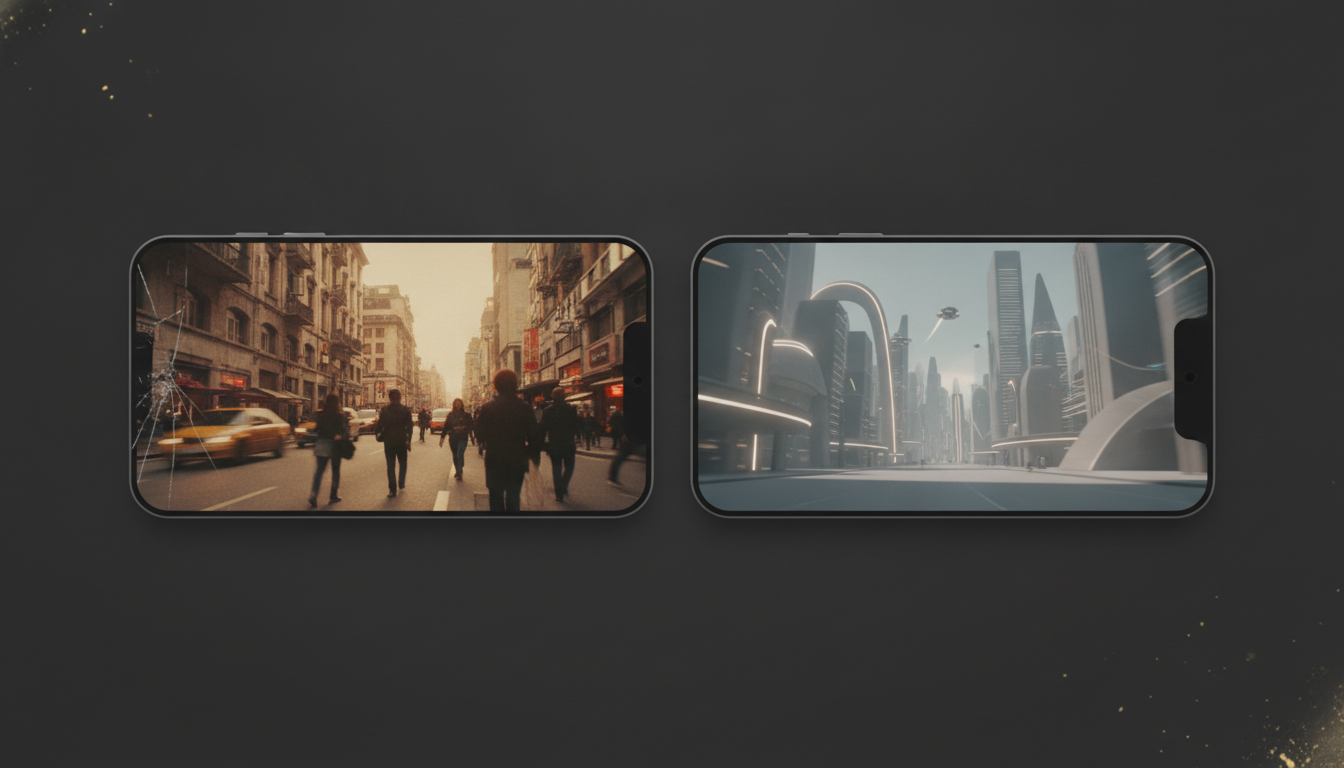
AI Reel Editing in 2026: How It Actually Works
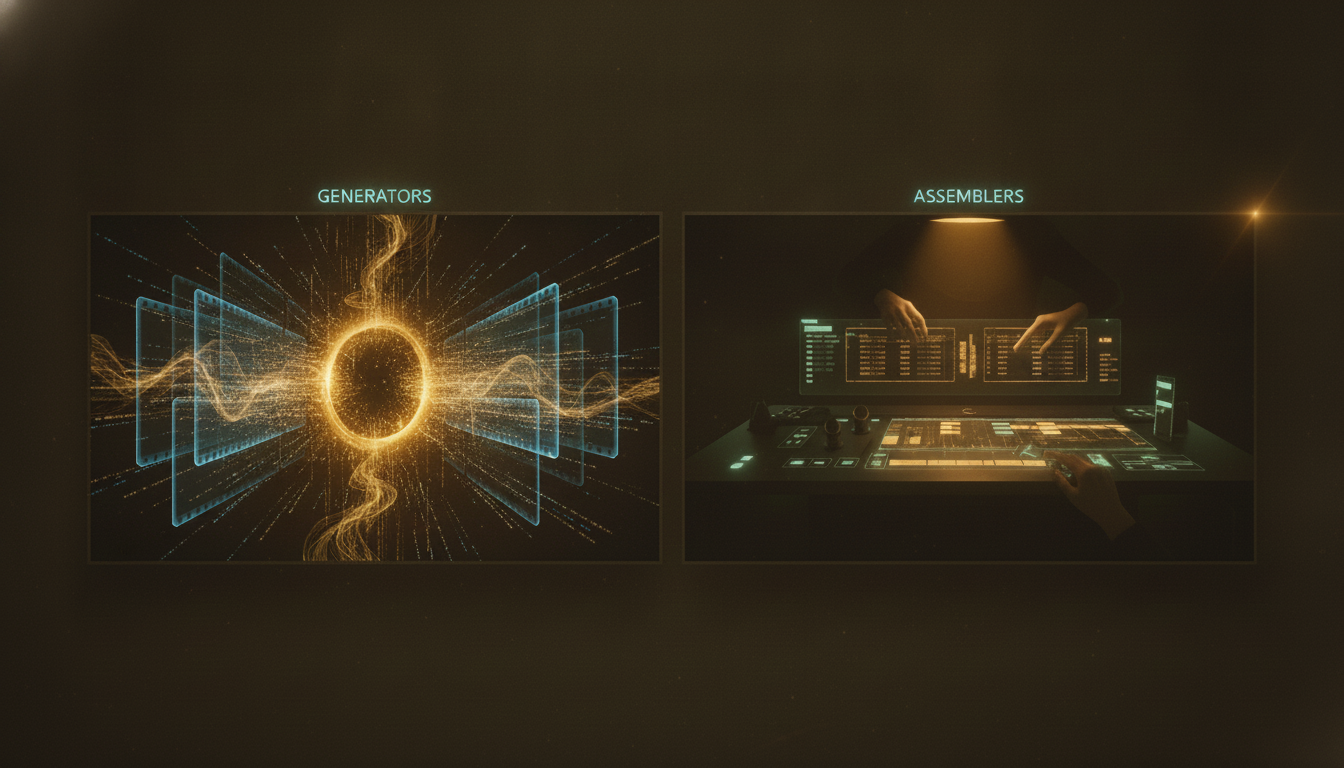
AI reel editing in 2026 splits into two very different categories: Generators and Assemblers. Here's what each one actually does, where they fail, and how to choose.
Search for AI reel editing and you will find hundreds of tools claiming they can help. Every AI reel editor markets itself differently. Some generate a reel from a text prompt, some auto-caption your uploads and some pull short clips from long videos. Some do all three.
The category is now large enough that grouping everything under AI reel editing has stopped being useful. Two creators using different tools are having completely different experiences and calling both of them the same thing. When a friend says they use AI to make reels, you have no idea what they actually mean.
So here is the honest breakdown. What AI reel editing actually means in 2026, the two categories the market has split into, what is working, what is still broken, and how to choose the workflow that fits how you already film.
What AI reel editing actually means in 2026
AI reel editing is any workflow where an AI model does part of the reel-making job that a human used to do manually. That is the broadest possible definition, and it covers everything from auto-captions to full reel generation from a text prompt.
The reason the term feels vague is that AI is not doing one thing anymore. It is doing many different things, sometimes in the same tool, sometimes in separate tools, and the parts of the workflow that get automated vary wildly.
Some tools automate the assembly step. You give them your footage and a script, and they cut the clips together automatically. Some tools automate the generation step. You give them a text prompt and they invent the visuals from scratch. Some tools automate small mechanical steps like captions, transitions, or audio cleanup, and leave the rest to you.
This is why the same phrase means such different things to different creators. To someone using a generative tool, AI reel editing means typing a description and getting synthetic footage back. To someone using an assembler, it means writing a script and watching their own clips fall into place.
The two categories: generators vs assemblers
Every AI reel editing tool in 2026 falls into one of two categories, or occasionally both. Getting clear on which one you actually need is the single most important choice in this space, because picking the wrong category means every other decision downstream is misaligned.
Reel generators
Generators create reels from text prompts. You type a description of what you want, and the tool synthesizes video from scratch. No camera. No filming. Just a prompt in, a video out.
The output looks impressive, especially the 2026 versions. Motion is smooth. Lighting behaves the way lighting should. Skin looks like skin. What you get is a finished-looking reel produced entirely by AI, from a few sentences of description.
Generators work well for concept mockups, abstract animation, fictional content, and any reel where the audience does not expect the footage to be real. They fail on anything requiring trust, documentation, or personal storytelling. The synthetic look, even when technically clean, reads as generic to audiences that have started to notice.
Reel assemblers
Assemblers work in the opposite direction. Instead of generating footage, they take footage you already have and cut it into a reel based on a script. You upload your own clips. You write or generate a script. The tool matches your clips to the script and assembles the whole thing into a finished reel.
Assembly-first tools solve a completely different problem. Not the lack of footage, but the difficulty of using the footage you already filmed. Most creators have hundreds of clips sitting on their phones. The problem is not shooting more. It is turning what already exists into reels that get published.
These tools also come with a different creative outcome. The reel that comes out is yours. Your face, your voice, your location, your light. Nothing about it can be mistaken for a template because it was cut from footage that only you have.
Generators solve a footage problem. Assemblers solve a workflow problem. Most creators do not have a footage problem.
How to tell which category a tool is in
If the tool asks for a text prompt, an idea, or a topic and produces video without asking for your clips, it is a generator. If the tool asks you to upload your library and then write or provide a script, it is an assembler. Some tools do both, but usually one is the primary product and the other is a bolt-on. Look at what the homepage hero animation shows. That is the workflow the tool is optimized for.
What is working in AI reel editing right now
A fair assessment of the category has to acknowledge what has genuinely improved. AI reel editing in 2026 is not the mess it was even a year ago. Several things are working well now that were rough as recently as late 2024.
Auto-captions
Word by word captions with accurate timing are now table stakes across most tools. Transcription accuracy is around 95 percent on clear audio, and the animated styles have improved to the point where most captions look native to the platform. You still need to check for occasional errors, but the days of manually syncing every caption are largely over.
Pause and filler-word trimming
AI can now reliably identify and remove pauses, ums, and false starts from your voiceover. Instagram launched a native version of this in late August 2026 called First Draft, which claims to auto-edit reels in about ten seconds by handling exactly this step. The feature works. Ten seconds saved does not sound like much until you multiply it across a year of reels.
Voice generation and voice cloning
Voice cloning has gotten to the point where a well-trained clone is genuinely hard to distinguish from the original. The remaining tell is emotional nuance, which the models still struggle with, but for informational or narrative reels the clone quality is more than good enough. Creators who record voice clones with consent and use them for scripted narration are seeing real time savings without giving up authenticity.
Semantic footage matching
This is the newest capability and the one changing assembler workflows most dramatically. Instead of manually scrolling folders to find the right clip for a script line, the tool reads what is actually in each clip and pairs the closest match automatically. This is what makes script-first reel workflows possible in under thirty minutes end to end.
Long-video-to-shorts extraction
Tools that take a long video and extract publishable short clips have gotten dramatically better at identifying hooks and standalone moments. The virality scoring is still imperfect but the base capability of finding the moments worth clipping is solid.
What is still broken in AI reel editing
Being honest about what does not work matters more than listing what does, because the failure modes are what determine whether a workflow actually fits into a real creator's schedule.
Generated footage still warps on details
Faces, hands, text, and logos are where AI-generated video still fails first. The overall scene can look photorealistic while the person in it has six fingers or the text on a sign says nonsense. Most generators cap a single generation at six to eight seconds, and the failure rate rises with longer clips. Expect to generate two to four takes to get one usable clip.
AI cannot make creative decisions
Every workflow that promises full automation eventually runs into the same wall. The AI can cut the clips, sync the captions, and match the footage. It cannot tell you which emotional beat should land where. It cannot tell you whether the hook should be a question or a statement. It cannot tell you whether the ending should be conclusive or open. Those decisions stay with the creator, and no current AI reel editing tool changes that.
Manual cleanup still eats 40 percent of the work
Research from Beerolls conversations with over a hundred creators earlier this year surfaced this pattern consistently. Even with AI in the workflow, roughly 40 percent of the total effort remains manual. Fixing wrong clip matches. Rewriting a hook the AI got flat. Adjusting timing that the AI got mechanically right but rhythmically wrong. The time savings from AI are real but capped, and the cap is much lower than most marketing claims.
Credit pools and hidden costs
Many AI reel tools now use credit-based pricing with multiple separate credit pools for different features. Generation credits. Voice credits. Stock media credits. Background removal credits. Creators frequently exhaust one pool while others sit unused. The advertised subscription price rarely matches what a real month of creation actually costs.
The synthetic look is becoming a liability
As AI-generated content proliferates on feeds, audiences are getting better at spotting it. Detection tools are proliferating. Content Authenticity Initiative and C2PA standards are embedding provenance into media at the point of capture. In eighteen months, the platforms your audience uses will likely start displaying which videos are generated and which are captured. Content built on synthetic footage will not benefit from that shift.
The assembly-first approach
Beerolls sits firmly in the assembler category. This is not an accident of feature choice. It is a design decision made because most creators, when honestly asked what they need, do not need more footage. They need faster use of the footage they already have.
The assembly-first workflow looks like this. You upload the clips already sitting on your phone or hard drive. You type one line of an idea. Beerolls writes a script from that idea in your tone. You record a voiceover or use a voice clone made with your consent. The tool matches your clips to each line of the script using semantic search. It auto-generates captions. It gives you a finished reel in around thirty minutes.
Nothing in this workflow generates synthetic video. Every visual in the finished reel is footage you actually filmed. The AI handles the assembly work that used to take hours. The creative decisions and the footage itself stay with you.
This is what assembly-first means as a category. Not just AI-assisted editing where a few small steps are automated. A fundamental workflow flip where the script leads and the footage follows, powered by AI that reads content instead of inventing it.
Choosing an AI reel editing workflow
The question is not which tool is best. It is which category actually fits how you work.
Pick a generator if: you do not film your own footage, your content is fictional or abstract, or your audience does not expect the video to represent something real. Motion graphics creators, animation-focused brands, and hypothetical scenario content all fit here.
Pick an assembler if: you film regularly, your camera roll has hundreds of clips, and your content is personal, documentary, or trust-driven. Vloggers, founders, tutorial creators, and lifestyle content all fit here.
Pick both if: you occasionally need abstract visuals for specific scenes inside otherwise-authentic reels. Some tools support this hybrid but most creators find it cleaner to run separate workflows for the two content types.
The mistake most creators make is picking a tool based on which one sounds most impressive in marketing copy, then trying to force their content to fit the tool. The right order is the opposite. Decide what your content actually is, then pick the category that serves that content, then pick the tool inside that category.
The AI reel editing space in 2026 has enough real capability that either category can produce publishable work. The tools are ready. The question is whether the workflow you pick actually matches how you want to make content, and whether the reel that comes out looks like something you would want to sign your name to.
What this means for the next year of your reels
AI reel editing has moved past the demo phase. The tools work. The question is which category you commit to and how much of your workflow you hand over.
For creators who already film regularly, the assembly-first AI reel editor removes the biggest bottleneck (finding the right clip for the right script line) without asking you to give up the thing that makes your content yours. For creators without footage, generators offer real utility but come with the trust cost that comes with synthetic content.
Neither category is universally better. But most creators, once they honestly look at what they post, realize they are firmly in the assembly camp. Their content is personal, their footage exists, and the missing piece is a workflow that lets them use what they already have.
If that sounds like your situation, try Beerolls on your next reel and see what an assembly-first workflow actually feels like.
Marketing at Beerolls. Writes about creator workflows and how to spend less time hunting for footage.