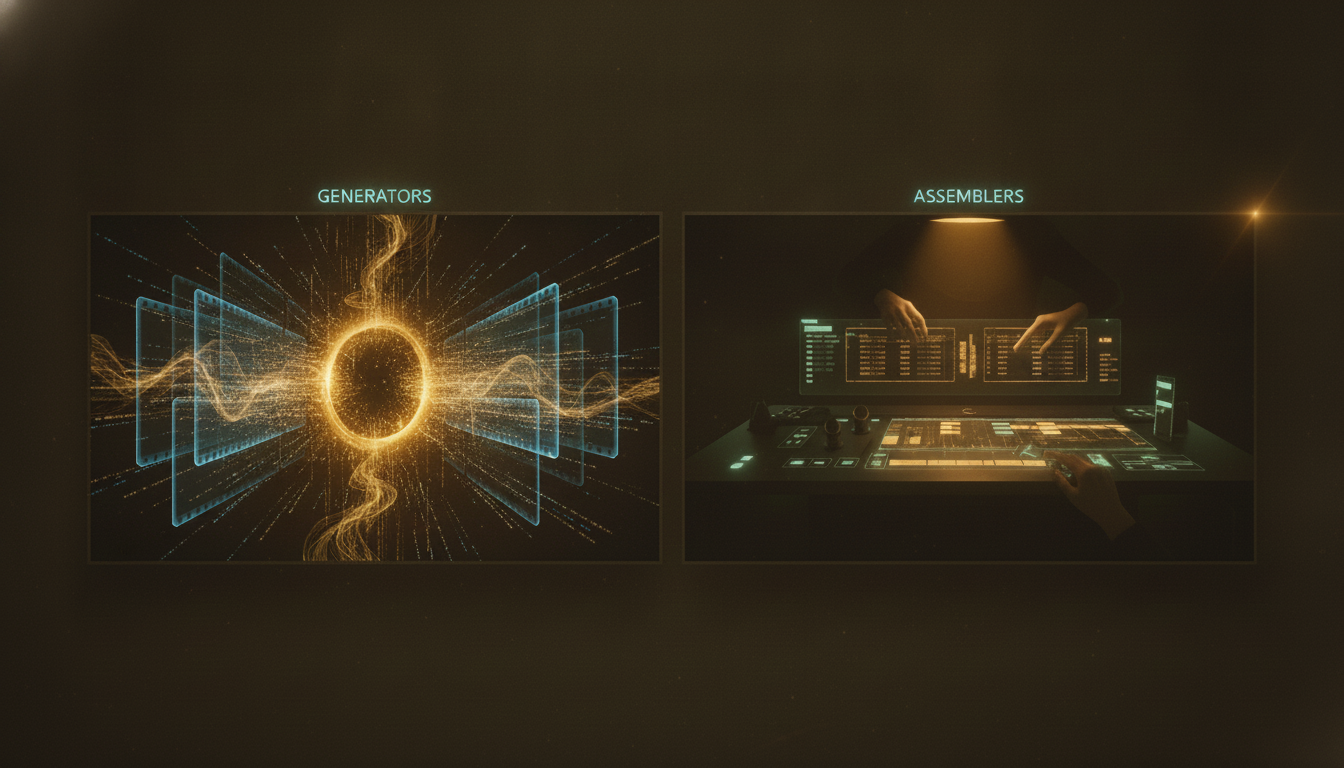
Music-Directed Reels vs Voiceover Reels: Which Format Your Content Needs
Music-directed reels and voiceover reels are two completely different formats. Picking the wrong one is why most reels fall flat. Here's how to know which one your next reel actually needs.
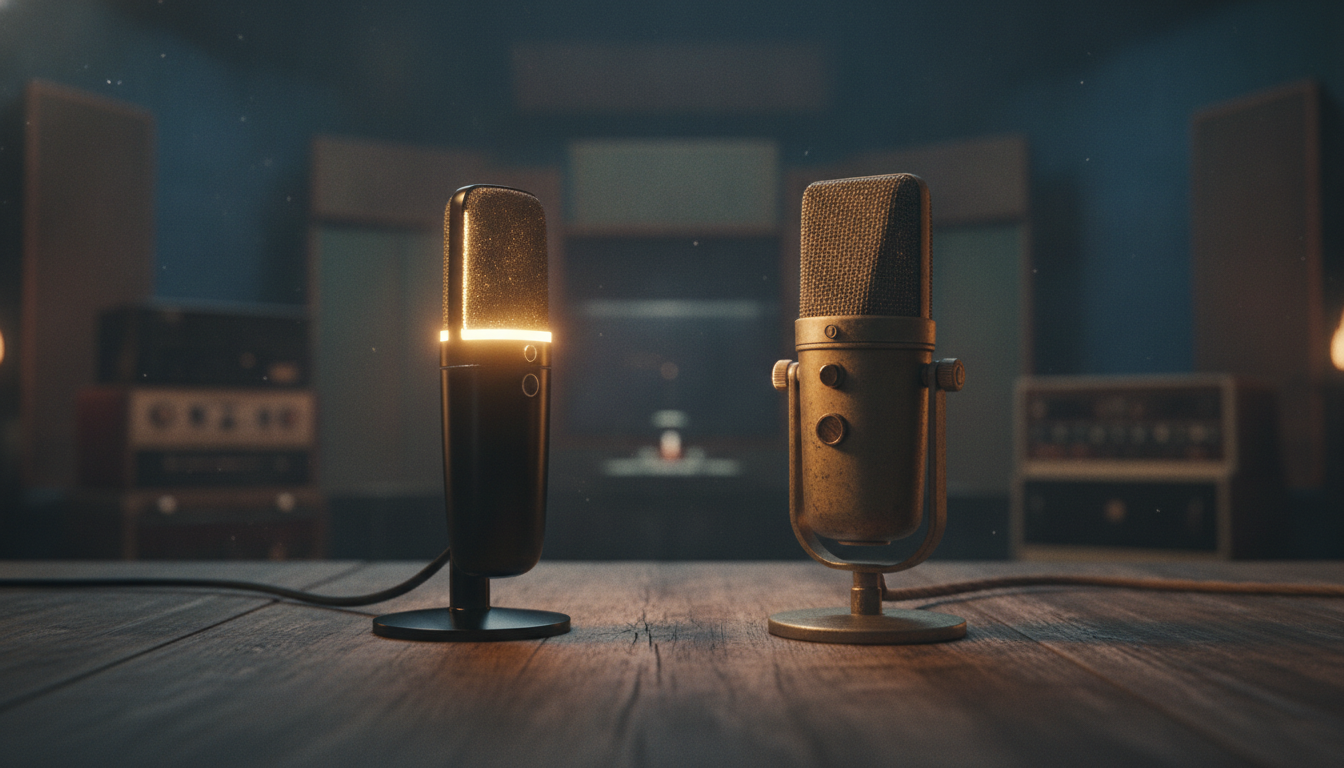
Every reel on your feed is doing one of two jobs. Either the music is leading and the visuals cut to the beat, or a voice is leading and the visuals support what is being said. These look similar from ten feet away. Up close, they are completely different formats with completely different rules.
Most creators pick between them accidentally. They shoot some footage, throw a trending track under it, add a voiceover if they feel like it, and hope the reel works. When it doesn't, they blame the algorithm or their hook. The real problem is usually that the format is wrong for the content.
This is a guide to picking on purpose. When music-directed reels work and when voiceover reels work. And a simple way to know which one your next reel actually needs before you start editing.
Two formats, two very different reels
A music-directed reel is driven entirely by the track. There is no voiceover. Cuts land on beats. Visuals build energy as the music builds. The story, if there is one, is told through pacing and shot selection rather than words. Think travel montages, product reveals, transformation reels, workspace time-lapses.
A voiceover reel is driven by a script. Someone is talking, and the visuals support what they are saying. Cuts land on words or ideas rather than beats. The narrative is explicit. Think tutorials, personal stories, founder updates, opinion reels, anything where you need to actually say something.
The reason these formats feel similar is that both use short-form vertical video with music playing. The reason they perform completely differently is that they demand different creative decisions at every step. Different footage. Different pacing. Different music choices. Different edit rhythm. A great music-directed reel and a great voiceover reel share almost nothing except the aspect ratio.
When music-directed reels work
Music-directed reels work when the content has energy and mood but no story that needs explaining. The visuals are the whole message. Adding a voiceover would only slow it down.
Travel content
A trip through a new city, a hike, a beach day. Music-directed reels work here because travel is a mood, not a lesson. Viewers do not need you to narrate what a sunset looks like. They need to feel like they are there. Cut wide shots to slow builds, close-ups to beats, and let the track do the emotional lifting.
Product reveals
Unboxing videos, before-and-afters, packaging shots. Music-directed works because the product speaks for itself. A voiceover explaining what the product is would break the pacing. Better to let the visuals show it and let the music mark the moments of reveal.
Transformations
Home renovations, workouts, cooking, makeovers. These are naturally rhythmic. There is a before, there is a process, there is an after. Music-directed reels compress this arc into 30 seconds without needing anyone to say a word.
Workspace and process content
Founder desk time-lapses, artist process reels, chef prep. Content where the visual is the story. A voiceover would add nothing because the viewer wants to watch the process, not hear about it.
Mood-driven content
Anything where feeling matters more than information. Weekend recap reels, quiet-morning reels, city-at-night reels. Music carries the mood in a way words cannot.
When voiceover reels work
Voiceover reels work when the content has information, a story, or an opinion that has to be spoken. The music is background. The words are the point.
Tutorials
Anything teaching someone how to do something. Software walkthroughs, cooking recipes, technique demos. The words explain what is happening while the visuals show it. Music-directed would leave viewers confused because they need to hear the instructions.
Personal stories
If you are sharing something that happened to you, a lesson you learned, or a moment that changed you, the voiceover carries the meaning. The visuals support the story but they are not the story. A silent version would lose the entire point.
Founder content
Building in public, product updates, behind-the-scenes reasoning. These require someone to actually explain what is happening. Music-directed would make founder content feel like a promotional montage instead of a real update.
Opinion and hot-takes
Reels where you are making a point. Reactions, arguments, industry observations. The voiceover carries the point. The visuals give the eye something to do while the argument lands.
Any content where you need to say something specific
The test is simple. If a viewer would miss the point of the reel by watching it with sound off, you need a voiceover. If the reel still works muted, music-directed can carry it.
The cut-to-beat rule (for music-directed reels)
This is the single most misunderstood rule in music-directed editing. Most beginners cut on every single beat and wonder why the reel feels tiring after three seconds.
The correct approach is beat sync at the structural level. Cut on downbeats and structural moments in the track, not every beat. Downbeats are the strongest beats in each bar, usually beats 1 and 3 in a 4/4 track. Structural moments are transitions like drops, breakdowns, choruses, and key changes. Cutting at these points feels intentional. Cutting on every beat feels like noise.
As one detailed guide on music-sync editing puts it, cutting on every beat gets boring in about four seconds. The goal is rhythm, not a metronome.
A practical framework for a music reel. In a 30-second reel with a 120 BPM track, you have about 60 total beats. If you cut on every beat, that is 60 edits in half a minute. Nobody can absorb that. A sustainable pace is closer to 8 to 15 cuts across the whole reel, landing on the beats that matter most. Downbeats. The one before a build. The moment when the chorus lands. The transition into the second half.
Different genres set different beat sync cadences. Hip-hop tracks tend to cut on beats 1 and 3. House music often cuts every 4 bars to match the phrase structure. Slower cinematic tracks reward holding on shots longer through the ambient sections and cutting sharper when the percussion enters. Study the track before you cut.
The other pacing choice worth naming is the deliberate hold. In every music reel that stops you scrolling, there is at least one shot that holds noticeably longer than the others. Usually a wide shot at a moment of stillness in the track. This contrast between fast cuts and one long hold is what makes the pacing feel composed instead of frantic. Every cut cannot be a peak. The valleys are what make the peaks land.
The three-listen test
Before you cut a music-directed reel, listen to the track three times without touching the timeline. First listen: identify the structural moments (intro, verse, chorus, drop, outro). Second listen: mark the downbeats you want cuts to land on. Third listen: identify the two or three moments that should be the biggest visual reveal. Now edit. This adds ten minutes to your process and roughly doubles the quality of the finished reel.
The story-first rule (for voiceover reels)
Voiceover reels have their own universal rule. The script leads, the footage follows. Not the other way around.
This means writing the script first, before you touch any clips. Every line of the script becomes a search for the visual that supports that specific line. Not the general topic. The specific line.
The failure mode most creators fall into with voiceover reels is starting with footage and then trying to write a script around what they filmed. This produces scripts that feel disjointed because the visuals were not chosen to serve the story. They were chosen because they existed.
Writing the script first also fixes pacing. When the script is set, the visuals get cut to fit the words instead of the other way around. If a line takes three seconds to say, the visual under it gets three seconds. If the next line takes six, the visual under it gets six. The pacing follows the language.
How to pick the right format for your next reel
The decision is easier than most creators make. Ask yourself one question. Do you have something specific to say?
If yes: voiceover reel. The words carry the meaning. Write the script first, let the visuals follow.
If no, but you have footage with mood or energy: music-directed reel. Let the track lead. Cut on downbeats. Watch the pacing.
If both: make two separate reels. Do not try to combine them. A reel with a voiceover competing with a heavy music track loses both. Pick a lane and commit.
The other useful filter is your posting cadence. Voiceover reels take longer to produce because the script has to be written and voiced. Music-directed reels are faster because you skip the writing entirely. If you are posting daily and struggling to keep up, music-directed reels are the format that scales. If you are posting once or twice a week and want each reel to say something specific, voiceover is worth the extra time.
Neither format is universally better. What matters is matching the format to what the content actually needs. A great music-directed travel reel and a great voiceover founder reel are both great. A muddled hybrid of the two is what most creators accidentally publish.
Once you know which format your next reel is, the rest of the workflow gets easier. You know what music to look for. You know whether to write first or shoot first. You know how to pace the cuts. You know when the reel is done. The format decision, made honestly and made early, is the shortcut to reels that actually work.
The last thing worth naming is that most creators can and should do both. Some weeks you have something to say and voiceover is the right call. Other weeks the footage is doing the talking and a music-directed cut is what the content deserves. The point is not to pick one format for your whole channel. It is to pick the right one for each individual reel, before you start editing, so the reel gets built for what it actually is.
Marketing at Beerolls. Writes about creator workflows and how to spend less time hunting for footage.